Renshaw Police Station
Created by Sydney Whitaker on Sat Sep 12th, 2026 @ 7:38pm
Renshaw Police Station
District: Old Renshaw • Common name: the station
Location and function
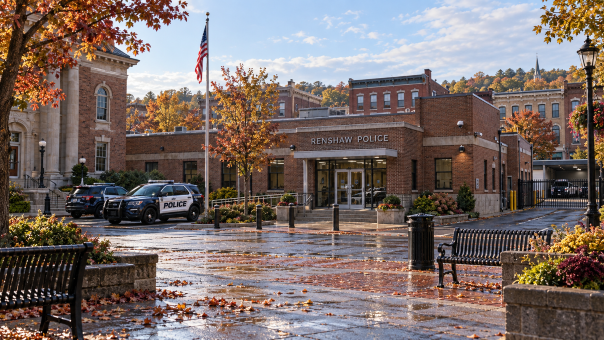
Renshaw Police Station stands at the western end of downtown, immediately behind Town Hall and facing the civic square. The low brick building was added to the municipal complex during the late twentieth century and has been renovated in stages ever since. It is functional, cramped in places and too public for anyone entering or leaving unnoticed.
The Renshaw Police Department serves the whole Town of Renshaw, including the central hamlet, Renshaw Landing and the rural territory of West Ridge. The Ontario County Sheriff possesses concurrent countywide authority and may investigate within the town, but does not command the RPD or automatically take over its cases. Any loss of local control must arise from a genuine legal mechanism, a formally requested transfer, a declared emergency or the independent jurisdiction of another agency.
Interior and facilities
The public lobby opens towards the square, with dispatch and reception protected behind glass. Beyond the secured doors are the patrol room, shared workstations, the chief’s and sergeants’ offices, two interview rooms, a small booking area, three short-term holding cells and a tightly controlled evidence room. A modest office once used by the department’s senior detective becomes available when the protagonist is placed in the acting role; it offers privacy, although not enough space to mistake for status.
The rear vehicle yard opens onto a service street and contains the patrol cars, a covered evidence bay and a detached garage. Records storage occupies more of the building than anyone admits. The department has no morgue and no meaningful forensic laboratory. Specialist examinations must be requested through county, state or regional partners, creating both practical delays and opportunities for outside pressure.
Place in the story
The station is where official procedure collides with small-town familiarity. Complainants recognise officers, Town Hall staff overhear raised voices and local reporters can watch the front entrance from across the square. The specialised unit may be given workspace here when cooperation is unavoidable, but its classified authority and refusal to explain itself make the arrangement uncomfortable from the outset.
Categories: Town and Recurring Locations